Is It Safe to Use a Gas Fireplace That Hasn't Been Used in Years?
Usually it can be made safe, but it should be checked before it is lit, not after. A gas fireplace in a St. Louis home that has sat unused for years, or came with a house you just bought, has had time for insects to block the pilot and burner, for a bird or wasp to nest in the vent, for sensors and gaskets to age, and for nobody to know who last touched it. None of that is visible from the room, and the failure that matters most, exhaust not leaving the house properly, has no smell. One inspection with the unit running answers it.
Updated October 26, 2026
Two situations, the same question
Most of the calls we get about this come from one of two places. Either the fireplace came with a house that was just bought and nobody knows its history, or it is the family's own fireplace and it simply has not been turned on for two, five or ten years because lighting it was a hassle or nobody got round to it.
Both end at the same question: can I just turn it on? The honest answer is that the fireplace probably still works, and that working is not the part to worry about. What years of sitting do is change the things you cannot see, and those are the things that decide whether it is safe.
What changes while a gas fireplace sits unused
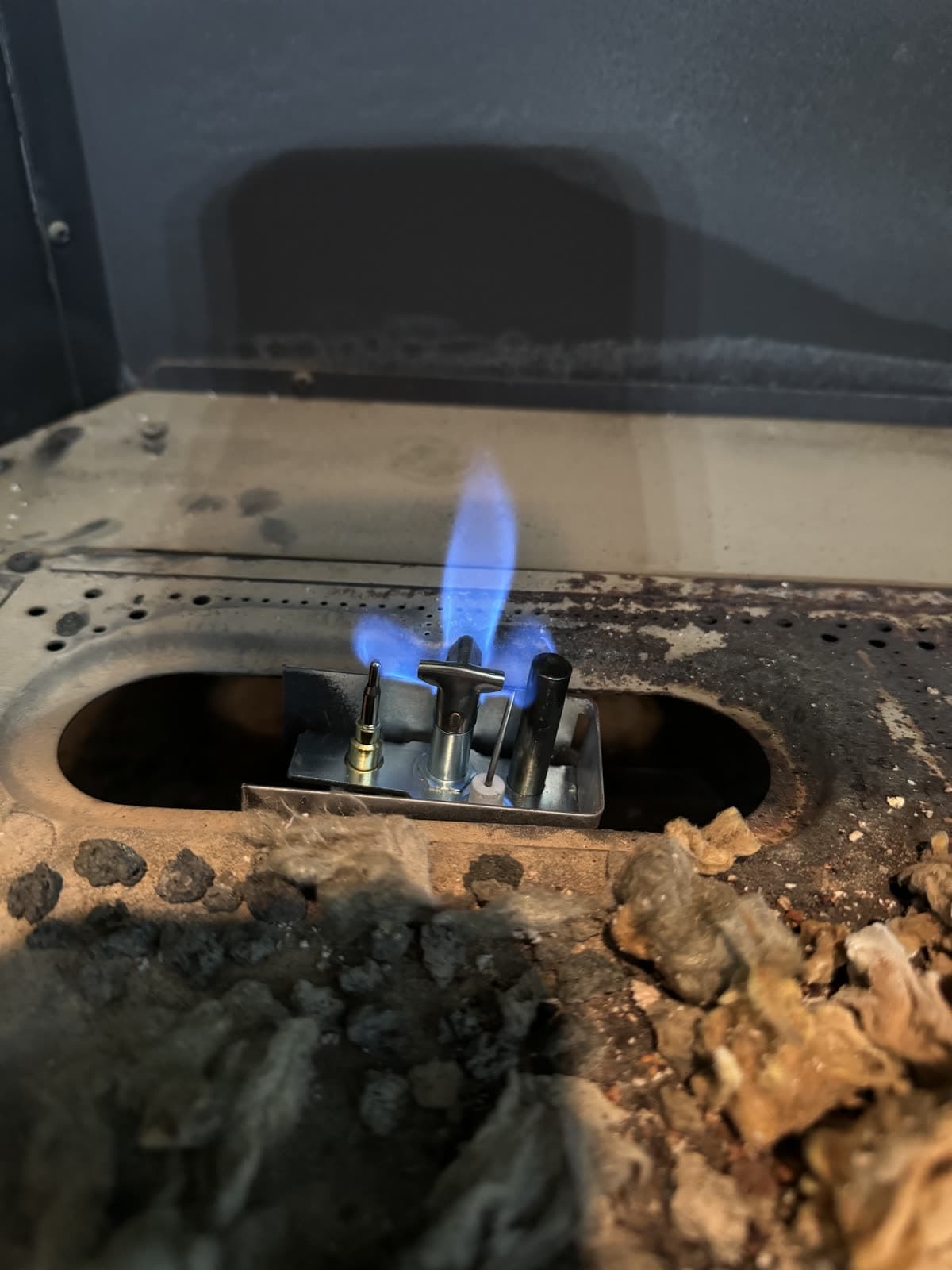
The pilot and burner get blocked. Spiders and other insects build webs and nests in the small pilot tube and burner openings of a fireplace that is not being used, and dust and pet hair settle on top. A partly blocked pilot gives a weak flame that will not hold, and a partly blocked burner gives a dirty, yellow flame. This is the single most common thing we find on a long-idle unit.
The vent can be blocked or disturbed. Outside, the vent termination is an inviting spot for a bird or a wasp nest. And if the house has had a new roof, new siding or a remodel since the fireplace last ran, the vent may have been knocked loose, covered or partly disconnected without anyone noticing. A blocked or damaged vent is the cause that turns this from an inconvenience into a carbon monoxide question.
Sensors and seals age even without use. The thermocouple or thermopile that proves the pilot is lit weakens over time, and the gasket that seals the glass on a direct-vent unit hardens and shrinks. Both are covered in more detail in our guide on whether a gas fireplace really needs annual service.
Batteries die and corrode. Many remotes, wall receivers and electronic ignitions run on batteries. After years in a drawer or a wall box they are flat or have leaked, and a fireplace that will not respond to the remote is often nothing worse than that.
Someone may have changed something. On an inherited fireplace the logs may have been moved or put back in the wrong order, the gas may have been shut off at a valve, or parts may have been swapped without a record. None of that is unusual. It just means nobody should assume the unit is set up the way the manufacturer intended.
What is normal the first time it runs
A light, dusty or slightly hot smell for the first several minutes is normal. Dust burns off the burner and the firebox, and a new or long-idle unit can also give off a faint smell as residue on the metal heats up. It should fade quickly and not come back on the next fire.
What is not normal: a smell that lingers or makes eyes sting; a smell of gas (the rotten-egg odor added to natural gas) at any point; soot on the glass, the logs or the wall above; a flame that is tall, yellow and lazy where it should be lively; a pilot that keeps going out; or anyone in the room getting a headache or feeling drowsy while it runs. Any of those means turn it off and have it looked at before using it again. Our guides on a yellow gas fireplace flame and a pilot that will not stay lit go into those two in detail.
If you just bought the house
A general home inspection usually notes that a gas fireplace is there and may say whether it lit, but it is not a gas appliance service. It does not normally include cleaning the pilot and burner, measuring the sensors, checking gas pressure, inspecting the vent run end to end or taking a carbon monoxide reading with the unit running. If your inspection report says something like "recommend evaluation by a qualified professional" about the fireplace, that is the report telling you it did not go further. Our guide on inspections when a house changes hands explains why that line appears so often.
It also helps to know what you have. The make, model and whether the unit is vented are on a metal rating plate, usually behind the lower louvre panel or under the logs. A photo of that plate tells us the type of system and which parts it takes before we arrive, and our gas fireplace brands guide explains where to find it and why the ignition type matters more than the brand.
What we check before it goes back into use
We look at the pilot and burner flame first, then clean the pilot assembly and burner ports, set the logs back in the positions the manufacturer specifies, test the thermocouple or thermopile, igniter and valve with a meter, check the gas connections and pressure, inspect the vent and its termination outside, check the glass and gasket, and take a carbon monoxide reading with the fireplace running.
On an older unit we will also tell you plainly whether it is worth repairing. Most long-idle fireplaces need a cleaning and sometimes a sensor, not a replacement. Where a part is no longer made for an old model, you hear that before any money is spent on it.
The inspection is a flat 69 dollars anywhere in the metro with no trip charge, with a written report and photographs. If something needs repairing you get one fixed price in writing first, and the 69 dollars comes off it in full.
Why not to just light it and see
It is tempting to turn the gas on, hold the knob and find out. The trouble is that the things most likely to be wrong after years of sitting, a blocked vent or a dirty burn, are exactly the ones that do not show themselves in the first few minutes, and carbon monoxide has no color and no smell. Keep a working carbon monoxide alarm near the fireplace, have the unit checked before its first fire, and if you ever smell gas, do not operate the fireplace or nearby light switches, leave the house, and call Spire at 800-887-4173 or 911 from outside.
What this looks like on a real job
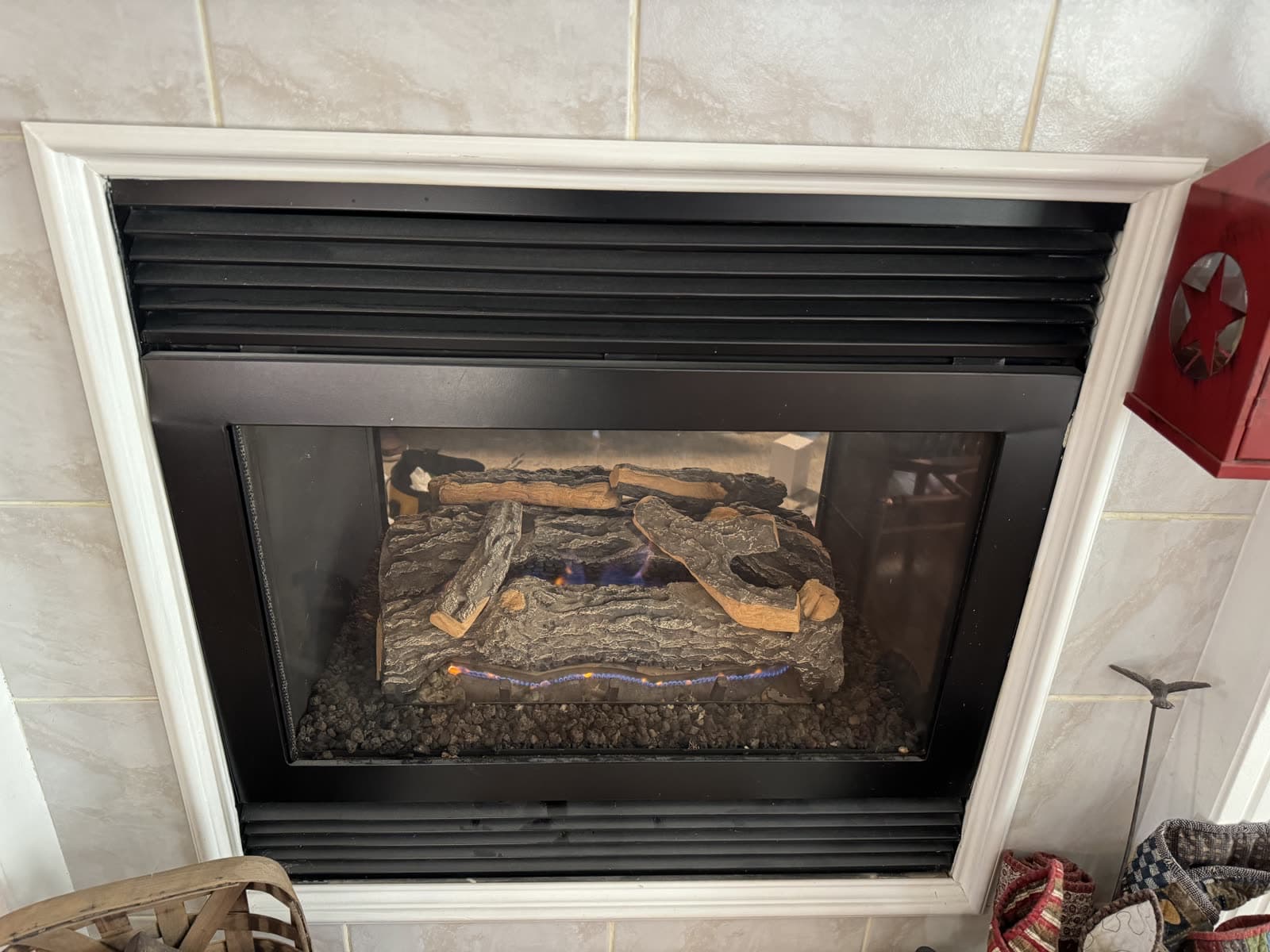
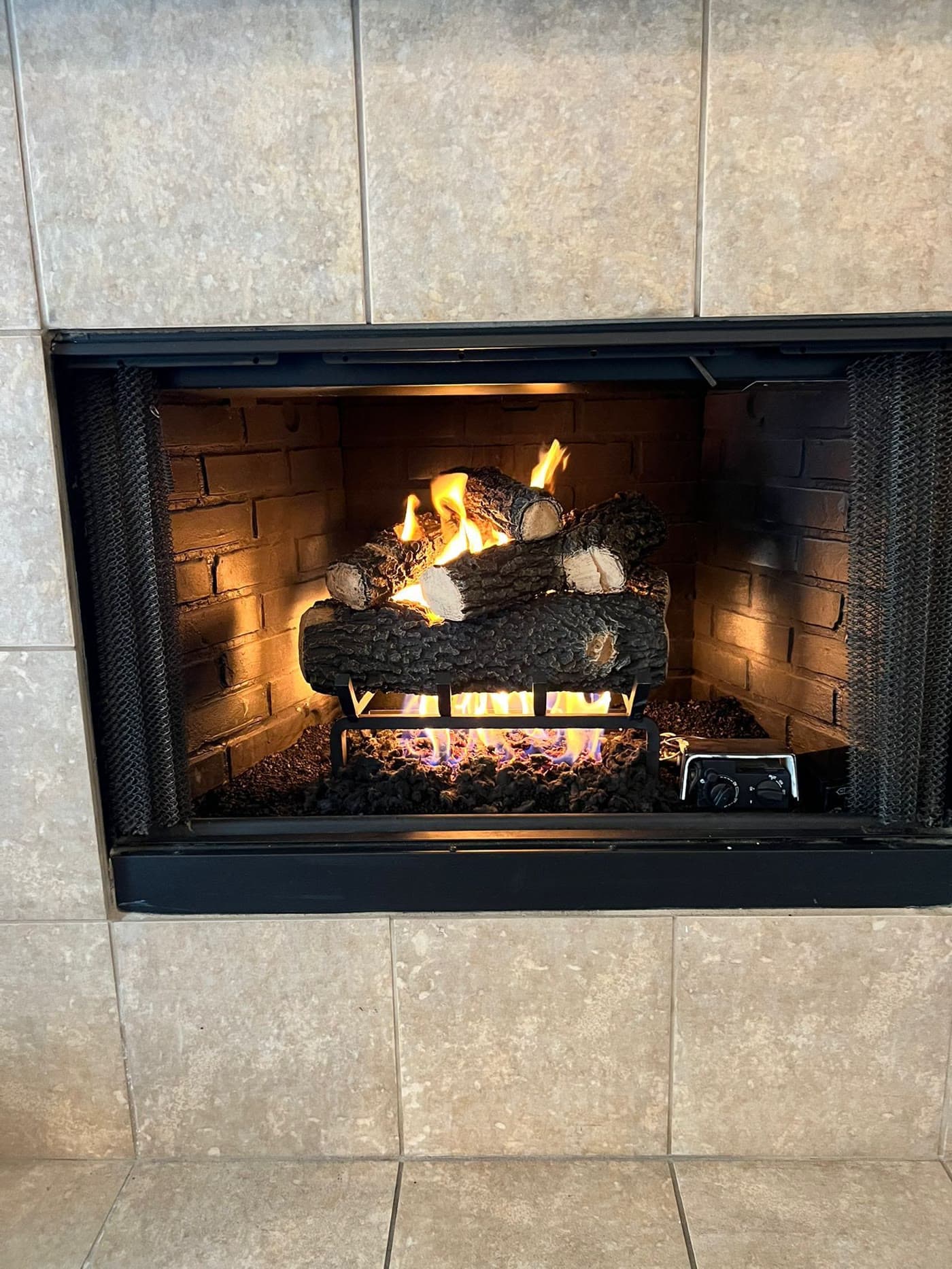
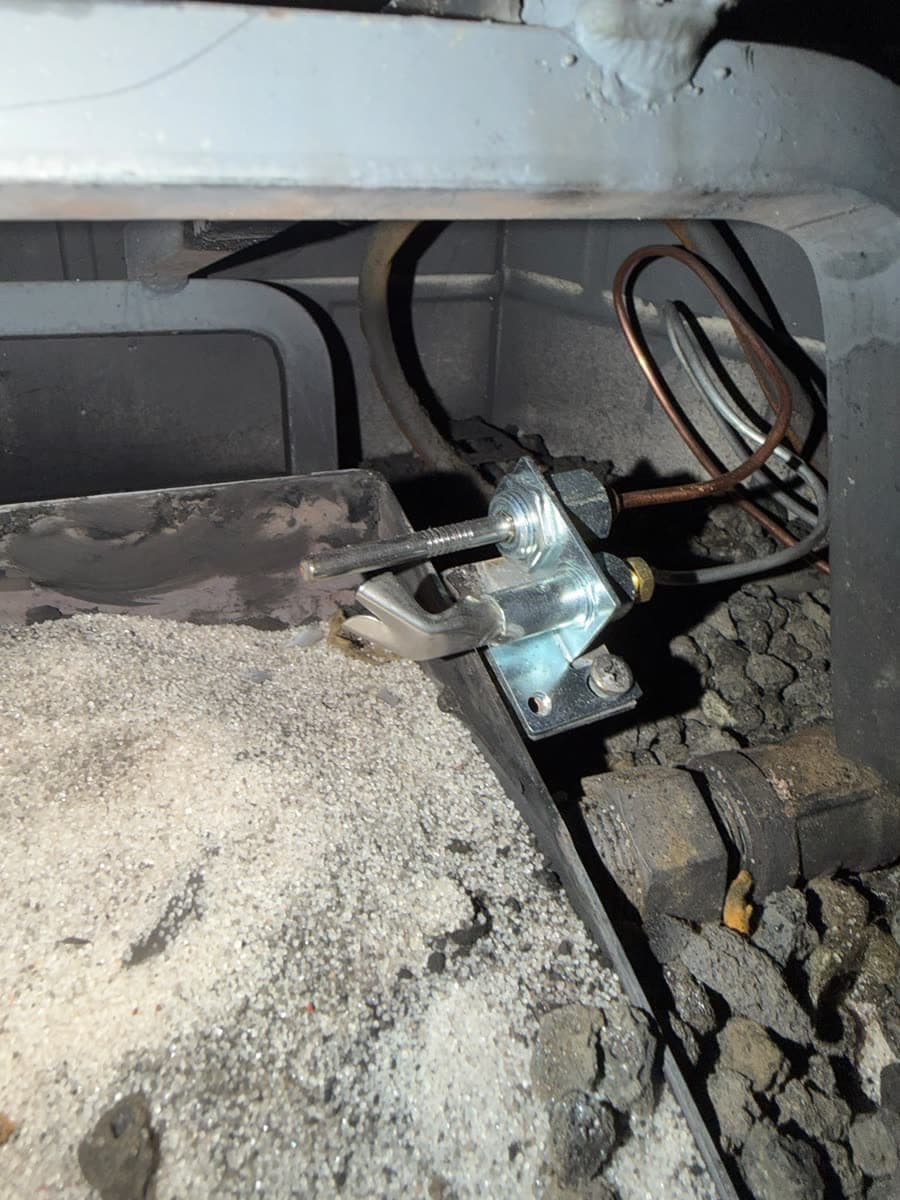
Photographs from our own work in the St. Louis metro.
Common questions
Is it safe to turn on a gas fireplace that hasn't been used in years?
It often can be, but have it checked first. After years unused, insects commonly block the pilot and burner, the vent can be nested or disturbed, and sensors and seals age. A blocked vent or a dirty burn can produce carbon monoxide without any warning smell, so the safe order is inspect first, light second.
We just bought a house with a gas fireplace. Do we need to have it serviced?
Yes, before the first fire. A general home inspection is not a gas appliance service and usually does not include cleaning the burner, testing the sensors, checking gas pressure, inspecting the vent or taking a carbon monoxide reading. You also have no record of who last worked on it, and an inspection gives you that starting point.
Why does my gas fireplace smell the first time I turn it on?
A light dusty or hot smell for the first several minutes is dust and residue burning off, and it is normal if it fades and does not come back. A smell that lingers, stings the eyes or comes with headaches is not normal, and a smell of gas means leave the house and call Spire or 911 from outside.
The fireplace won't turn on after years of sitting. Is it broken?
Usually not. The most common causes on a long-idle unit are dead or leaking batteries in the remote or receiver, a pilot tube blocked by spiders or dust, a gas valve that was shut off, or a weakened thermocouple or thermopile. All of those are repairs, not reasons to replace the fireplace.
Is an old gas fireplace worth repairing?
Most are. Long-idle units usually need a cleaning and sometimes a sensor or igniter rather than replacement. The exception is an old model whose parts are no longer made, which the inspection identifies before you spend anything on repairs.
If this sounds like your chimney
A $69 inspection tells you exactly which of these it is, with photos, before anyone quotes a repair.
Gas Fireplace Inspection
A gas fireplace inspection checks the venting, gas connections, burner combustion and safety controls, and includes a carbon monoxide reading with the unit running. Ours is $69, credited back in full if you book a repair.
Gas Fireplace Repair
Most gas fireplace problems come down to a failed thermocouple or thermopile, a dirty pilot assembly, a bad igniter, or a blocked vent. We diagnose with instruments rather than replacing parts and hoping, then quote the repair before doing it.
Not sure which one this is?
Start with a $69 inspection and a photo report. Credited back in full when you book the work. Call (314) 887-7250.
Open 24/7 · Emergency service, day or night.