Why Is My Gas Fireplace Flame Yellow Instead of Blue?
A yellow flame on a gas fireplace is not automatically a problem: many gas log sets are designed to burn yellow so they look like wood. What matters is change. If the pilot has turned yellow or grown bigger, if the main flame has gone lazy and floppy, or if soot is appearing on the logs, glass or wall, the gas is not burning cleanly. In St. Louis homes that is usually a dirty burner or pilot, logs out of position, or an air or gas-pressure problem, and because incomplete combustion is what produces carbon monoxide, it should be checked rather than lived with.
Updated October 9, 2026
When yellow is normal
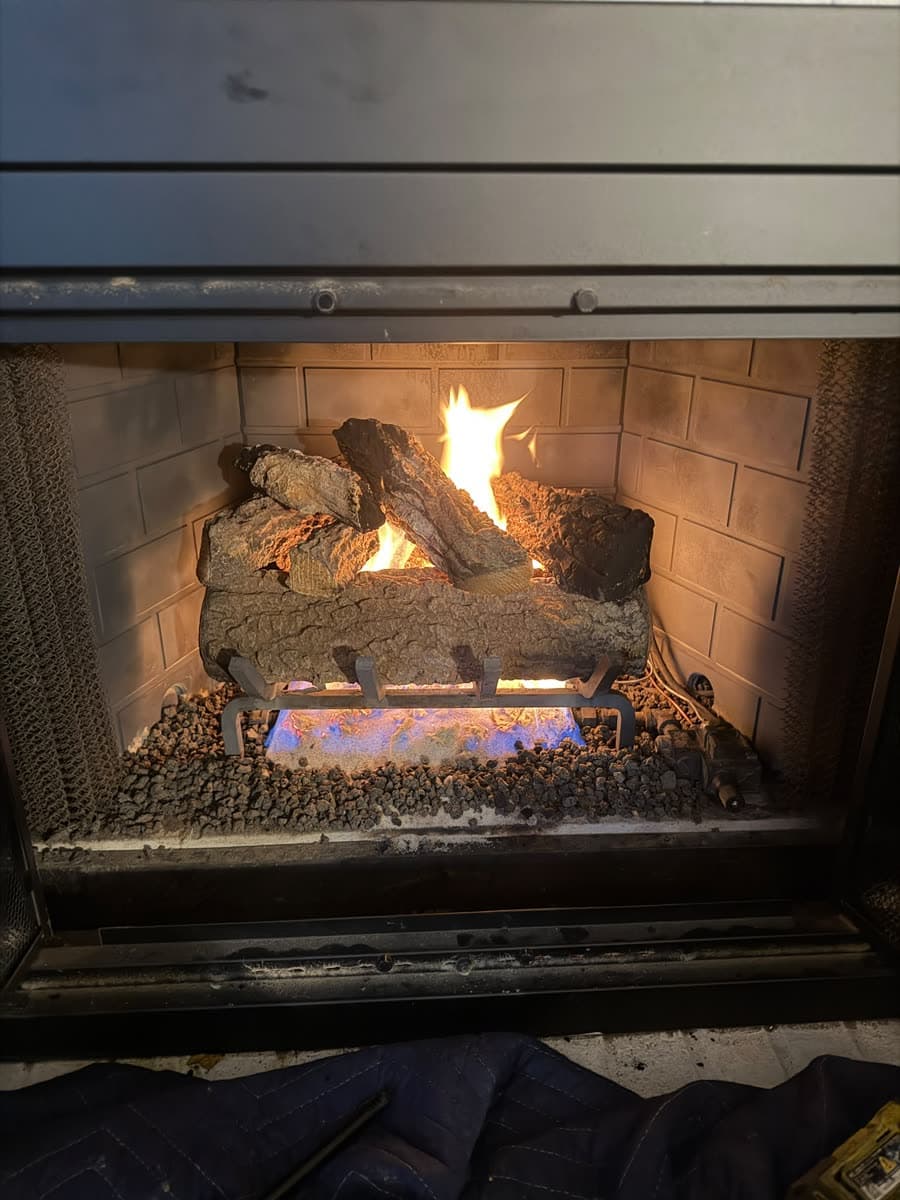
Gas burns blue when it gets all the air it needs at the burner. Decorative gas log sets are deliberately set up to burn with less of that air at the flame, so the flame turns yellow and orange and dances around the logs the way a wood fire would. If your fireplace has always burned that way, the logs are clean, and nothing has changed, a yellow flame on the logs is the design working.
A few small orange flickers are also normal. Dust and tiny particles in the room air glow orange as they pass through the flame, and the effect is stronger when a humidifier is running nearby.
When yellow means something is wrong
The pilot changed. The small pilot flame should be compact and mostly blue on almost every gas fireplace. A pilot that has grown larger, turned yellow, or wraps lazily around the sensor instead of hitting it cleanly is one of the clearest signs of a combustion problem.
The main flame changed. A flame that used to be lively and now looks tall, floppy and smoky-tipped, or one that lifts off the burner, is not getting the right mix of gas and air.
Soot appears. Black on the glass, dark patches on the logs, or a gray film on the wall or mantel above the opening all mean unburned carbon is leaving the flame. Where there is soot from incomplete combustion, there is also more carbon monoxide.
It smells. A gas fireplace should have almost no smell once it is past the first burn of the season. A sharp or lingering odor alongside a yellow flame is a reason to turn it off.
What usually causes it
Dirt in the burner or pilot. Dust, lint, pet hair and spider webs collect in the small air openings over a season, especially while the fireplace sits unused through the summer. Less air at the flame means a yellower, dirtier flame. This is the most common cause by a wide margin.
Logs out of position. Logs that have been moved, bumped during cleaning, or put back in the wrong order let the flame hit them where it should not. That chills the flame, turns it yellow and lays down soot fast.
The air shutter. Many burners have an adjustable air shutter that sets how much air mixes with the gas. If it is out of adjustment or partly blocked, the flame changes color and shape.
Gas pressure or the wrong orifice. Pressure that has drifted out of specification changes the flame. So does a unit that was converted between natural gas and propane without the correct parts, which shows up as a large, yellow, sooting flame from the start.
Venting. On a direct-vent fireplace, a blocked or damaged vent can let exhaust mix back into the combustion air, which starves the flame. That is the one cause that turns a cosmetic-looking symptom into an urgent one.
What we check
We look at the pilot and burner flame before touching anything, then clean the burner ports and pilot assembly, set the logs back in the exact positions the manufacturer specifies, check the air shutter and gas pressure, confirm the orifice matches the fuel, inspect the vent, and take a carbon monoxide reading with the fireplace running. You get a fixed price before any part is replaced, and the $69 inspection is credited back against the repair.
We saw exactly this in October: a St. Louis homeowner wrote that the pilot on a fireplace that came with the house had gotten bigger and turned yellow. An inherited unit with no service history is the most common place to find it.
Why not to adjust it yourself
Air shutters, orifices and gas pressure are set to the appliance's rating, and getting them wrong in either direction makes the burn worse, not better. Moving logs to "fix" the look of the flame often causes the soot problem in the first place. Keep a working carbon monoxide alarm near the fireplace, turn the unit off if the flame or smell has changed, and if you ever smell gas, do not operate it or nearby light switches, leave the house, and call Spire at 800-887-4173 or 911 from outside.
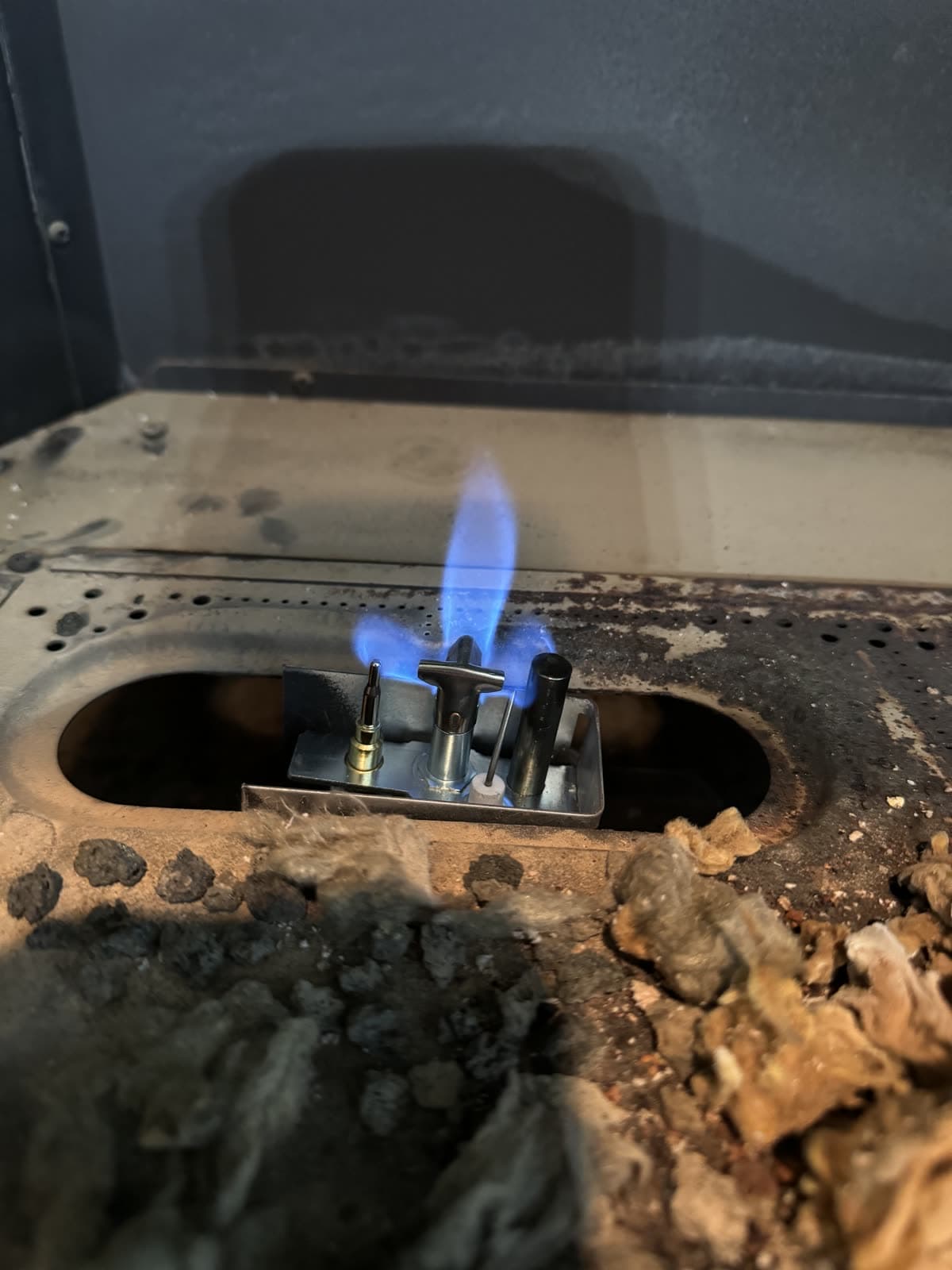
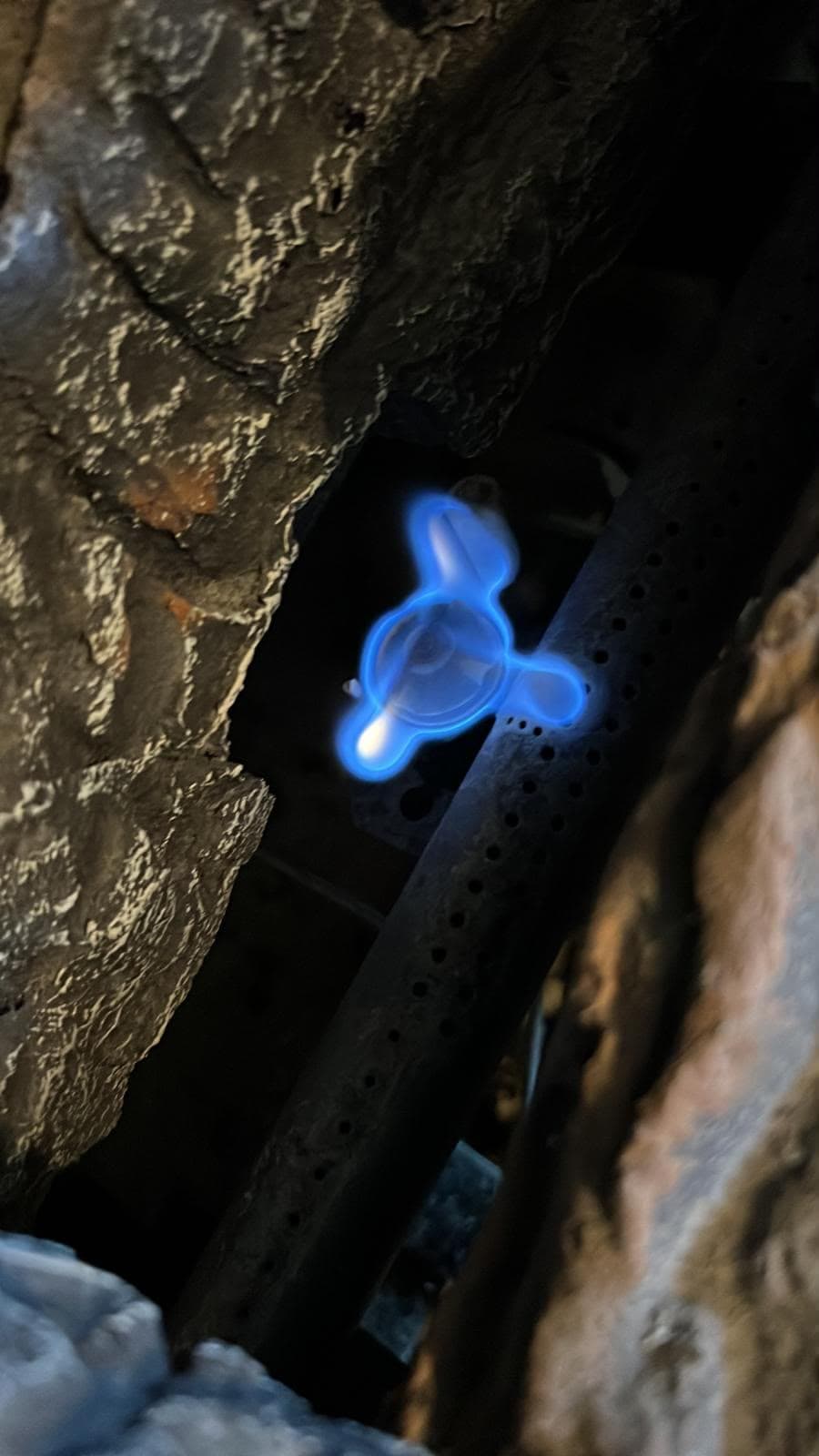
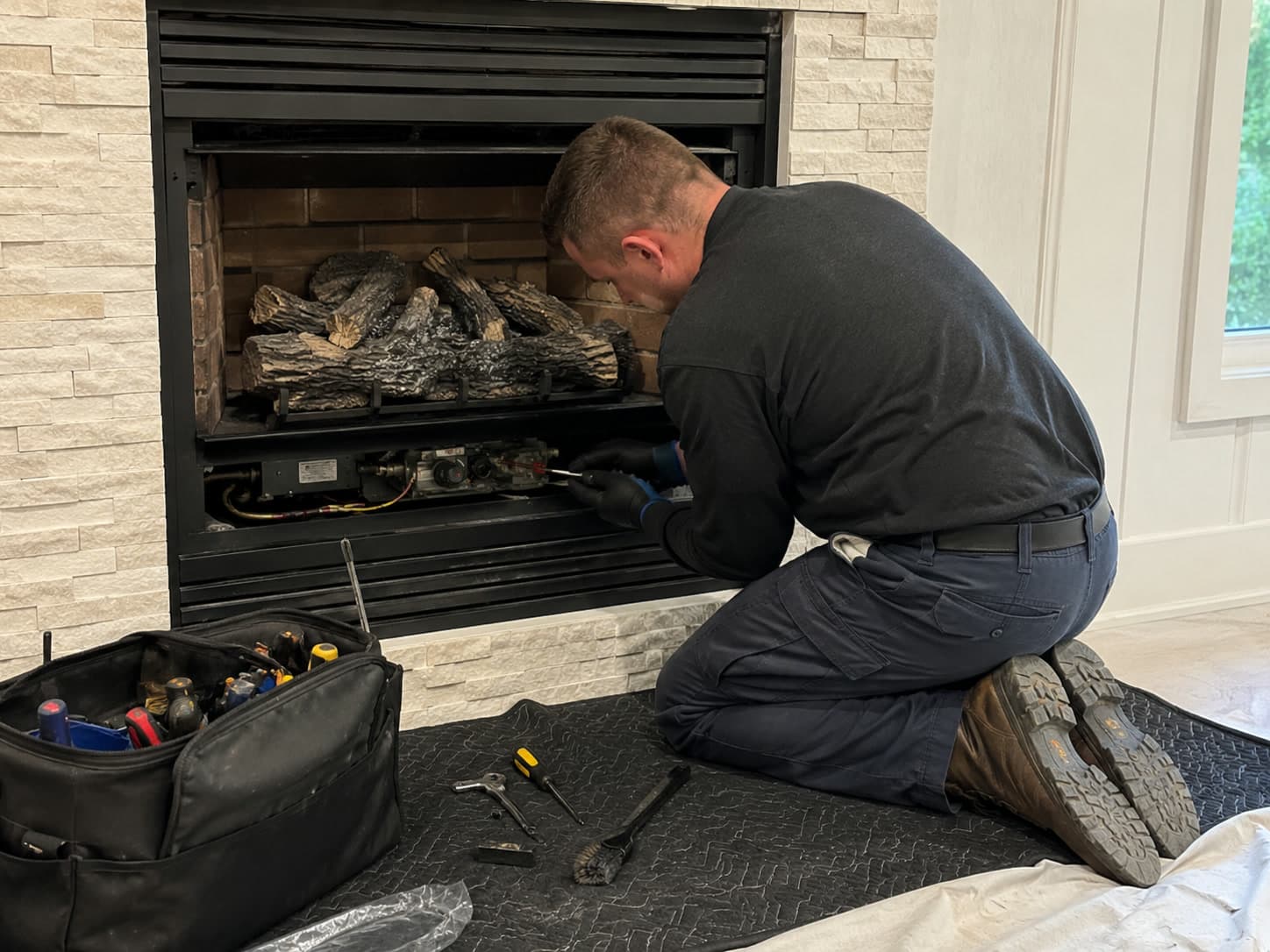
What this looks like on a real job
Photographs from our own work in the St. Louis metro.
Common questions
Should a gas fireplace flame be blue or yellow?
It depends on the appliance. The pilot should be small and mostly blue on almost every unit, and many burners run blue at the base. Decorative gas logs are designed to show yellow, wood-like flames on the logs. The warning sign is not the color by itself but a change: a pilot or flame that has turned yellower, larger or lazier than it used to be, or new soot.
Is a yellow flame on a gas fireplace dangerous?
A yellow flame that the logs are designed for is not. A flame that has turned yellow because the gas is not burning completely can produce more carbon monoxide and soot. If the color changed, if soot is appearing, or if there is an odor, turn the fireplace off and have it checked, and keep a carbon monoxide alarm in the room.
Why is there black soot on my gas fireplace glass?
Soot means incomplete combustion, most often from logs out of position so the flame hits them, a dirty burner, or an air shutter out of adjustment. It is worth fixing quickly, because the same incomplete combustion that makes soot also makes carbon monoxide.
Why did my pilot light get bigger and turn yellow?
Usually a dirty or partly blocked pilot orifice or air opening, sometimes gas pressure that has drifted. The pilot is meant to be a small, mostly blue flame that hits its sensor cleanly. A large yellow pilot is a combustion fault, not a cosmetic one, and can also stop the fireplace from lighting reliably.
Will cleaning fix a yellow gas fireplace flame?
Often, yes: dirt in the burner or pilot is the most common cause, and a proper cleaning plus resetting the logs fixes it. If the cause is gas pressure, the wrong orifice or venting, cleaning will not help, which is why the flame, pressure and a carbon monoxide reading all get checked on the same visit.
If this sounds like your chimney
A $69 inspection tells you exactly which of these it is, with photos, before anyone quotes a repair.
Gas Fireplace Repair
Most gas fireplace problems come down to a failed thermocouple or thermopile, a dirty pilot assembly, a bad igniter, or a blocked vent. We diagnose with instruments rather than replacing parts and hoping, then quote the repair before doing it.
Gas Fireplace Inspection
A gas fireplace inspection checks the venting, gas connections, burner combustion and safety controls, and includes a carbon monoxide reading with the unit running. Ours is $69, credited back in full if you book a repair.
Not sure which one this is?
Start with a $69 inspection and a photo report. Credited back in full when you book the work. Call (314) 887-7250.
Open 24/7 · Emergency service, day or night.