Why Won't My Gas Fireplace Light — or Why Does It Keep Shutting Off?
A St. Louis gas fireplace that won't light, or one that lights and then shuts itself off within a few seconds or minutes, almost always comes down to one of three things: a weak thermocouple or thermopile no longer proving a flame is present, a dirty or misaligned pilot assembly, or a safety sensor correctly detecting a real problem with the burn or the venting. None of the three is a sign you need a new unit, but they're not the same repair — and they're not something to keep re-lighting and hoping.
Updated August 16, 2026
Two different symptoms point in two different directions
"It won't light" and "it lights, then shuts off" sound like the same complaint, but they usually mean different things, and it's worth being specific when you're describing it to anyone diagnosing it — including yourself.
If the pilot won't light at all, or lights and immediately goes out the second you release the control knob, the fault is almost always in the pilot circuit itself — the thermocouple or thermopile, the small sensor that proves to the gas valve a flame is actually burning. If it doesn't sense that flame fast enough, the valve cuts gas as a safety measure, which is exactly what it's designed to do.
If the pilot lights and stays lit, but the main burner won't fire, or the whole unit runs for a few minutes and then shuts down on its own, that points somewhere else — a fouled pilot orifice starving the flame, a draft issue keeping the flame too small to be sensed reliably, or an oxygen depletion sensor (ODS) tripping because it's detecting reduced air quality around the unit.
This is a gas-appliance question more than a chimney one, and it comes up constantly in newer-construction parts of the St. Louis metro. Chesterfield, for example, is mostly 1980s-to-2000s construction, and most fireplaces there are factory-built units with a metal chimney inside a framed chase rather than traditional masonry. Those systems are reliable, but the pilot and safety components are exactly the parts that wear out after a decade or two of seasonal use.
Why the pilot won't stay lit: the thermocouple and thermopile
Every standing-pilot gas fireplace has a small sensor sitting in the pilot flame. A thermocouple generates a tiny voltage from the heat of the flame and uses it to hold a safety valve open; a thermopile does the same job but generates more voltage and can also power things like a wall switch or blower on a millivolt system. Either way, the principle is the same: no flame, no voltage, no gas.
These sensors weaken with age and with buildup — a layer of soot or oxidation on the tip reduces the signal even when the pilot flame itself looks fine. That's why a fireplace can light perfectly on a cold morning and then act up an hour later: the sensor is right at the edge of working, and small variations in flame size or draft push it over.
It's a small part and a routine repair. It is not, on its own, a reason to think about replacing the fireplace.
Why it shuts off after it's already running
A fireplace that lights fine and runs for a while before shutting itself off is usually the ODS or a similar safety sensor doing exactly its job — detecting that oxygen levels around the appliance have dropped, or that it isn't burning cleanly, and cutting the gas before that becomes a carbon monoxide problem rather than after.
That's worth taking seriously rather than treating as a nuisance to work around. The three most common underlying causes are a room that's too sealed for the appliance's air requirements, a vent that's partially blocked, or a burner that's dirty enough to be burning incompletely — which is also the cause of the sooty black glass a lot of gas fireplace owners notice separately.
When it's more than a sensor or a cleaning
Less often, the cause is the gas valve itself failing, wiring or a control board issue on a newer electronic-ignition unit, or — on an older fireplace — a cracked heat exchanger, which is a safety issue and typically means the unit is done. None of these are things you can tell apart by ear or by how many times you've tried the igniter; they need a meter on the components and a combustion and carbon monoxide reading with the unit actually running.
Why this isn't a good one to troubleshoot yourself
It's tempting to treat a gas fireplace like any other appliance you'd poke at until it works again. The difference is that the failure modes here — a flame that isn't sensed correctly, a burner not getting enough air, venting that isn't clearing what it should — are the same conditions that produce carbon monoxide, which has no smell and early symptoms that read like the flu. A repeatedly re-lit pilot that keeps going out is the appliance telling you something isn't right; relighting it again isn't a fix.
If you ever smell gas near the fireplace, don't operate it, don't flip light switches near it, leave the house, and call Spire at 800-887-4173 or 911 from outside before doing anything else.
What this looks like on a real job
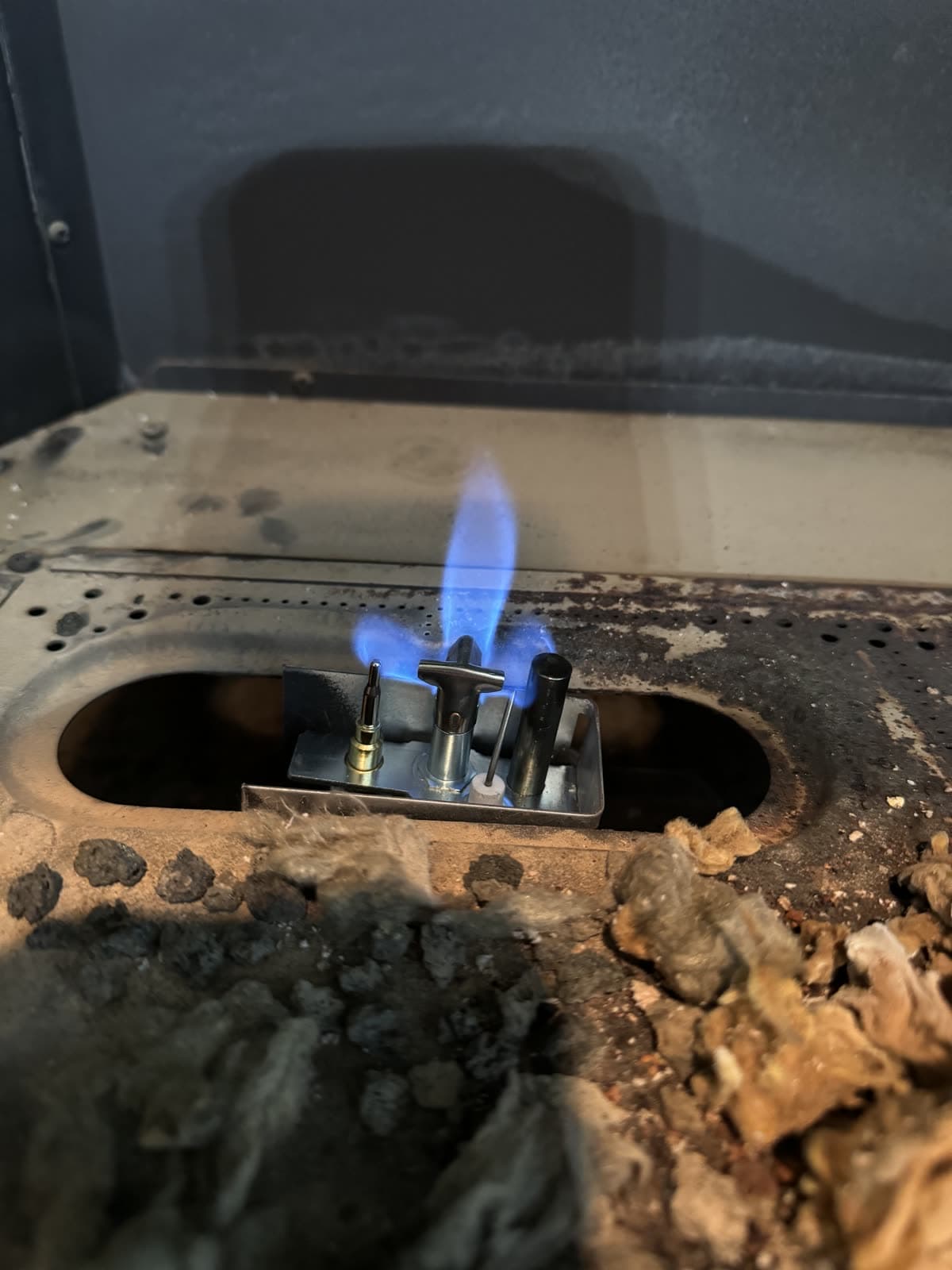
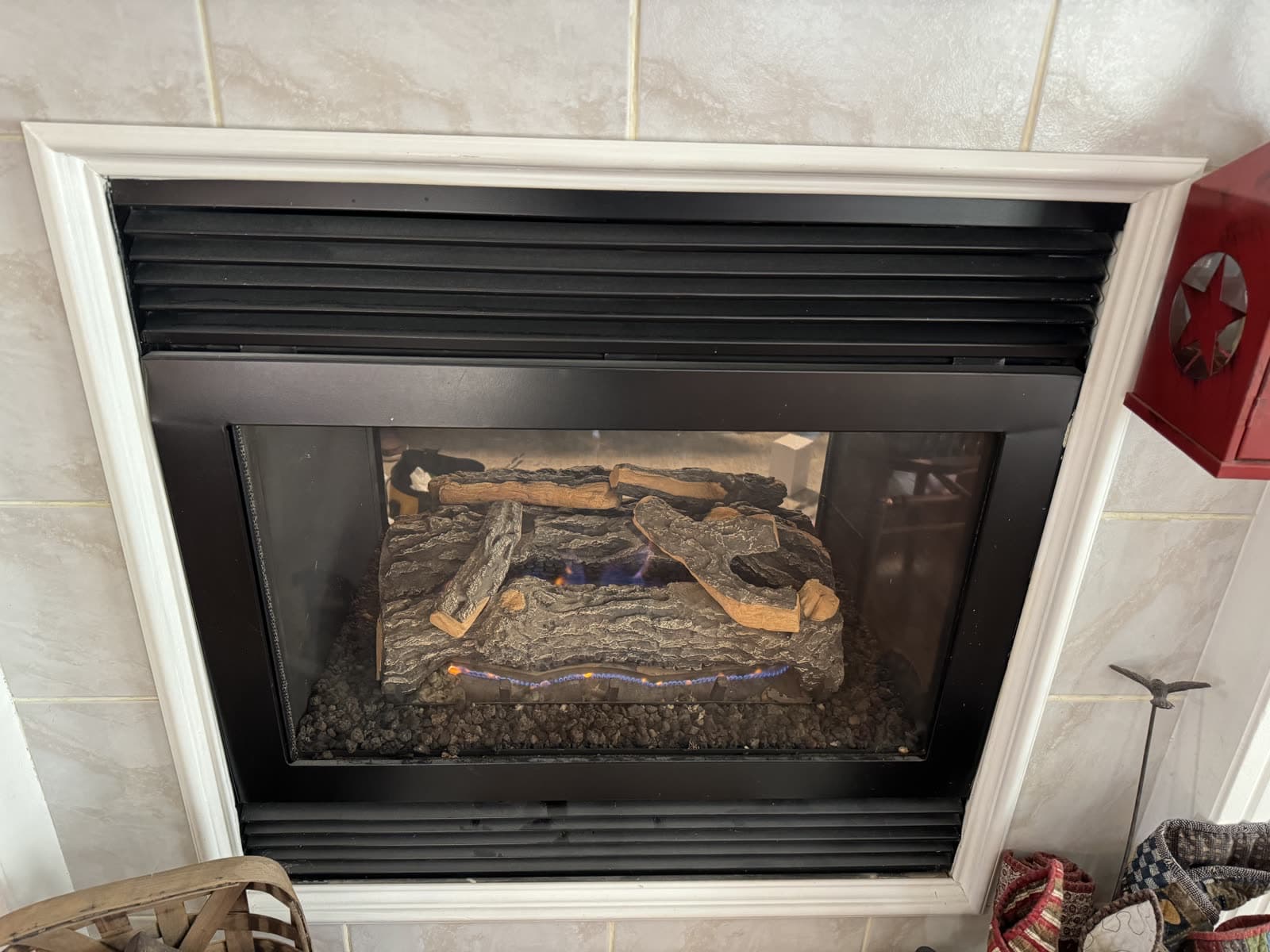
Photographs from our own work in the St. Louis metro.
Common questions
Is it safe to just keep re-lighting the pilot myself?
Occasionally, yes — a pilot that goes out once in a while, especially in a drafty spot, isn't an emergency. A pilot that won't stay lit repeatedly, or a unit that shuts itself off after running, is a sign of a real fault and shouldn't become a daily routine. Get it looked at rather than working around it.
Does a pilot that won't stay lit mean I need a whole new fireplace?
Almost never. The thermocouple or thermopile that causes most of these cases is an inexpensive, routine part to replace. A full replacement only comes up with a cracked heat exchanger or a gas valve failure on a unit old enough that parts are no longer made for it.
Why does it work fine some days and not others?
A weak sensor or a slightly dirty pilot is often right at the edge of working. Small things — a draft from an open window, the exact position of the flame, even outdoor temperature — can be enough to tip it from lighting to not on a given day. It will get more consistent, not less, if left alone.
Can these symptoms mean there's a gas leak?
A pilot or ignition problem on its own usually isn't a leak — it's a sensor or component issue. But if you smell gas at any point, treat it as a leak regardless of what else is going on: don't operate the fireplace or use light switches nearby, leave the house, and call Spire at 800-887-4173 or 911 from outside.
What does a gas fireplace repair actually involve?
A safety check first — gas pressure, connections, and a carbon monoxide reading — then testing the thermocouple or thermopile, the pilot assembly, the igniter and the gas valve with a meter rather than guessing, followed by cleaning the burner and verifying the vent is clear. You get a fixed price before anything gets replaced.
If this sounds like your chimney
A $69 inspection tells you exactly which of these it is, with photos, before anyone quotes a repair.
Gas Fireplace Repair
Most gas fireplace problems come down to a failed thermocouple or thermopile, a dirty pilot assembly, a bad igniter, or a blocked vent. We diagnose with instruments rather than replacing parts and hoping, then quote the repair before doing it.
Gas Fireplace Inspection
A gas fireplace inspection checks the venting, gas connections, burner combustion and safety controls, and includes a carbon monoxide reading with the unit running. Ours is $69, credited back in full if you book a repair.
Smoky Fireplace & Draft Repair
A fireplace that smokes into the room has a draft problem, not a fireplace problem. Either something is restricting the flue, or your house is pulling harder on the air than the chimney is. There are about six real causes, they need completely different fixes, and the $69 inspection tells you which one you actually have instead of guessing.
Not sure which one this is?
Start with a $69 inspection and a photo report. Credited back in full when you book the work. Call (314) 887-7250.
Open 24/7 · Emergency service, day or night.