Why Does My Chimney Smell Like Smoke in the Summer?
A St. Louis chimney that smells like smoke in summer is doing three things at once: creosote is still lining the flue, humid Missouri air is soaking into it and reactivating the odor, and your air conditioning is lowering the pressure inside the house enough to pull that air down the chimney and into the room instead of letting it rise. The smell was there all along. Summer just gave it a way in.
Updated September 6, 2026
Why it smells in July and not in January
This is the part that makes people doubt themselves. The fireplace has not been lit since February, the damper is shut, nothing has changed inside the house, and yet the living room smells faintly of an old campfire every afternoon. Nothing is wrong with your nose, and nothing new has happened in the chimney. What changed is the weather and the air pressure in your house.
In winter, warm indoor air rises and leaves through the top of the house, which pulls air up the chimney along with it. Whatever is in the flue goes up and out. In summer that pattern weakens or reverses, and the chimney becomes the easiest place for air to come back down. The same flue that vented odor away for five months starts delivering it into the room.
What the smell actually is
The smell is creosote, the tar-like residue that condenses onto the inside of a flue every time wood burns. It builds up in layers over seasons, and it does not evaporate or wash away on its own. A flue that has been used for a few winters has creosote in it even if the last fire looked clean and the firebox looks tidy.
Creosote is not strongly aromatic when it is dry. Add humidity and that changes. Moisture soaks into the deposits and releases the compounds that carry the smell, which is why the odor tracks the weather so closely: worst on the muggiest days, noticeably better after a dry spell. Homeowners often describe it as coming and going for no reason. It is not random, it is following the dew point.
This matters beyond the smell. Creosote is combustible, and heavy build-up is what turns an ordinary fire into a chimney fire. An odor problem in August is a useful early warning about the condition of the flue before you light the first fire of the season.
Why your air conditioning is part of the problem
Most air conditioning systems leave a house at slightly negative pressure. They pull more air out of the living space than they put back, and the house makes up the difference by drawing air in wherever it can: gaps around windows, the attic hatch, bathroom vents, and the largest uncapped hole in the building, which is the chimney.
That is why the smell so often gets stronger the moment the air conditioning kicks on, and why it can be worse upstairs than down, or worse in a house that has been tightened up with new windows and insulation. A better-sealed house has fewer easy paths for replacement air, so proportionally more of it comes down the flue.
It also explains why closing the damper disappoints people. A damper is a rough metal flap, not a seal. It reduces airflow, it does not stop it, and the pressure difference pulling air downward does not care that the flap is shut.
Why older St. Louis homes tend to have it worse
Much of the housing stock in St. Louis City, University City, Webster Groves and Maplewood was built before 1940. Those chimneys were built with soft lime mortar, and many have unlined flues or original clay tile that has cracked with age.
A flue in that condition holds odor in two ways. Rough, porous or damaged surfaces give creosote far more area to cling to than smooth intact liner does. And gaps in the liner or open mortar joints let humid air reach the deposits from the sides rather than only from the top and bottom, so more of the build-up gets reactivated on a humid day.
Those same gaps let the smell take shortcuts into the house, through a chase, a wall cavity, or an unused second flue in the same stack, which is why the odor sometimes shows up in a room with no fireplace in it at all. When that happens it is a strong sign the problem is the flue structure rather than simple build-up.
Why the usual remedies do not hold
Deodorizers, plug-ins and scented candles mask the smell for as long as they are running and change nothing about its cause. The creosote is still there, the humidity still reaches it, and the pressure still pulls it inward. Masking also removes the one useful signal you had about the state of the flue.
Cleaning helps, and for a chimney that simply has heavy build-up and no structural problem, a proper sweep is often most of the answer. But sweeping alone will not hold if air is being pulled down a flue that is cracked, unlined, or missing a cap. The smell comes back, and people conclude the sweep did not work when the sweep was only ever half the job.
There is one more reason not to treat this as a nuisance to cover up. Anything that can carry odor down a flue and into a room can carry combustion gases the same way when an appliance is running. The pressure problem behind a summer smell is worth understanding before heating season, not after.
What actually stops it
Odor almost never has a single cause, which is why guessing at it tends to waste money. It is usually some combination of how much creosote is present, what condition the liner is in, whether the chimney is capped, and how the pressure in the house behaves. The right fix depends on which of those is doing the most work.
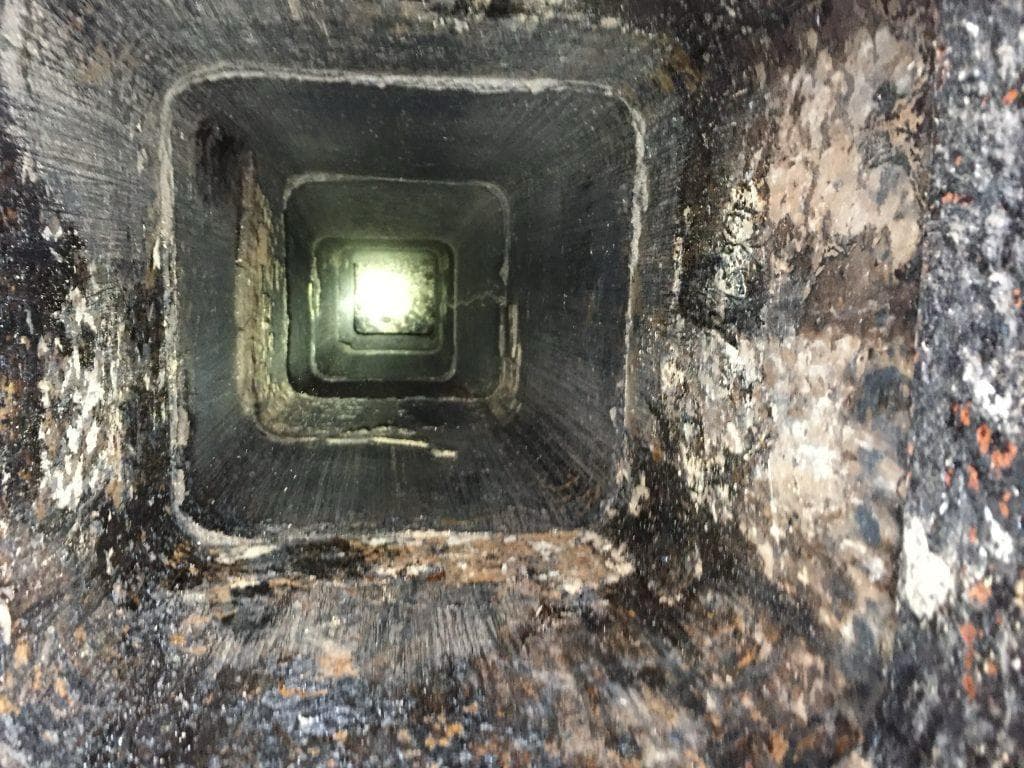
That is what the inspection is for. It is a flat 69 dollars anywhere in the metro, with no trip charge, and it includes a written report with photographs of the inside of the flue so you can see the deposits and the liner condition yourself rather than taking our word for it. If you book the repair with us, the 69 dollars comes off the price in full.
If you are smelling it now, late summer is the right time to deal with it. The flue is empty, nobody needs the fireplace, and it is far better to find a cracked liner in September than on the first cold night in November.
What this looks like on a real job
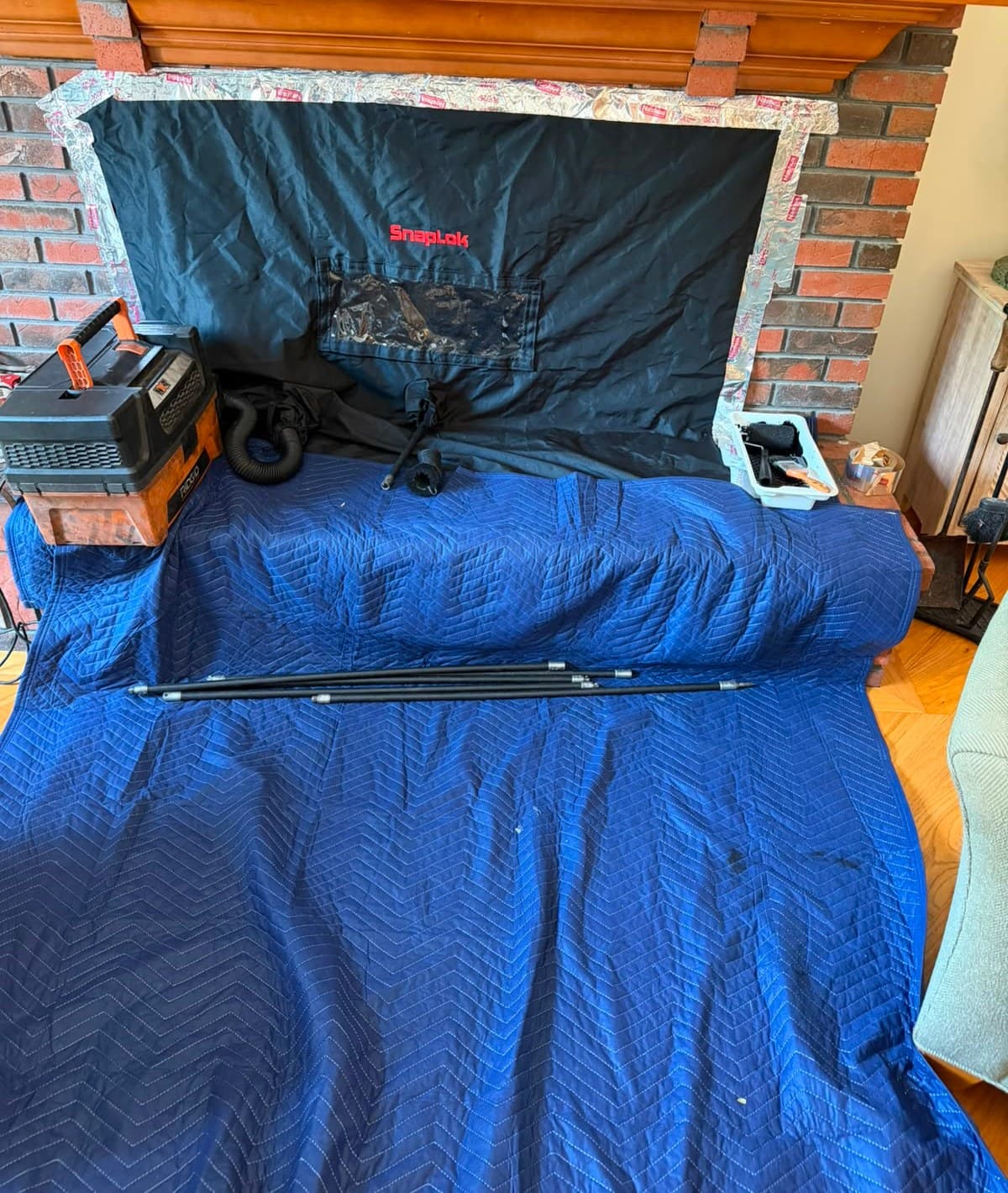
Photographs from our own work in the St. Louis metro.
Common questions
Is a chimney smell dangerous, or just unpleasant?
The odor itself is not toxic at the levels people notice in a living room. What it indicates can matter: creosote build-up is combustible, and a flue that pulls air downward in summer can also pull combustion gases downward in winter. Treat it as information about the chimney rather than as an air-freshener problem.
Why is it worse on some days than others?
It tracks humidity and air pressure. Muggy days reactivate more of the creosote, and the smell usually intensifies when the air conditioning runs, because that is when the house is pulling hardest to replace the air being removed. Dry, mild days with the system off are often nearly odor-free.
We never use the fireplace. Why does this still happen?
Creosote left by previous owners does not expire. A flue that was used regularly twenty years ago still has deposits in it, and they behave exactly the same way in humid weather. Plenty of the homes we visit for odor have not had a fire lit in them in a decade.
Will a chimney cap fix the smell?
Sometimes it is a large part of the answer, because an open flue takes on far more rain and humid air than a capped one. It is rarely the whole answer on its own. A cap addresses what gets in from the top; it does nothing about deposits already lining the flue, or about the pressure pulling air down.
Can I just seal the fireplace shut for the summer?
Blocking a flue is not something to improvise. Anything that seals well enough to stop odor also traps moisture inside the chimney, and if the flue also serves a furnace or water heater it must never be obstructed. If sealing is the right approach for your setup, it needs to be done knowing what else the chimney is connected to.
How long does it take to fix?
Most odor work is finished the same day once we know the cause, whether that is cleaning the flue, capping it, or correcting the draft. Structural repairs such as relining take longer, and get quoted as one fixed price in writing before anything starts.
If this sounds like your chimney
A $69 inspection tells you exactly which of these it is, with photos, before anyone quotes a repair.
Chimney Odor & Smoke Smell Removal
A chimney that smells is usually telling you three things at once: there is creosote in the flue, moisture is reaching it, and air is being pulled down the chimney into your room instead of up and out. Deodorizers only mask it. The $69 inspection identifies which of the three is driving the smell, and the fix removes it at the source.
Chimney Sweep
A professional chimney sweep removes creosote, soot and blockages from your flue so the chimney drafts properly and will not catch fire. We quote your chimney before we start, and you approve the price first.
Chimney Cap Installation
A chimney cap is a metal cover with mesh sides that sits on top of the flue. It keeps out rain, animals and debris, and stops burning embers from landing on your roof. It is the cheapest part of a chimney and it prevents the most expensive problems.
Not sure which one this is?
Start with a $69 inspection and a photo report. Credited back in full when you book the work. Call (314) 887-7250.
Open 24/7 · Emergency service, day or night.