What Does Yearly Chimney Maintenance Actually Include?
Yearly chimney maintenance in St. Louis is three separate jobs that get lumped together: an inspection every year whether you use the fireplace or not, a sweep whenever creosote has built up to about an eighth of an inch, and keeping the cap, crown, mortar and flashing watertight. The inspection is the one that cannot be skipped, because it is how you find out whether the other two are needed this year. Ours is a flat $69, credited back in full against any work.
Updated October 5, 2026
Three jobs that get called one
Ask five homeowners what chimney maintenance means and you get five answers. Most mean sweeping. Some mean a new cap. A few mean the mortar on the outside. All of them are part of it, but they are different jobs on different schedules, and treating them as one is how a chimney ends up swept every year and leaking for five.
The first is inspection: looking at the whole system, inside and out, and writing down what condition it is in. The National Fire Protection Association standard, NFPA 211, calls for one every year regardless of how often the fireplace is used.
The second is sweeping: physically removing creosote and soot from the flue. It is needed when there is measurable buildup, about an eighth of an inch, which for a household burning wood through the winter usually means once a year and for occasional use means less often.
The third is keeping water out. In St. Louis, water does more damage to chimneys than fire does, and the parts that stop it, the cap, the crown, the mortar joints and the flashing, wear out on the weather's schedule rather than on how much you burn. Our guide to chimney stack maintenance goes through those four parts one at a time.
What a yearly look actually covers
Inside: the firebox, the damper, the smoke chamber above it and as much of the flue as can be seen. Cracked firebrick, a damper that no longer closes, creosote glazed onto the smoke chamber and gaps in the flue liner are what turn an ordinary fire into a house fire, and none of them can be seen from the room.
Outside: the cap, the crown, the brick and mortar, and the flashing where the chimney passes through the roof. This is where most of the expensive problems start, and they almost always start small. A hairline crack in a crown, a cap that has rusted through, a lifted edge of flashing.
On a gas fireplace the list is different. There is no creosote, so there is nothing to sweep, but the vent can block, the sensors wear, the burner clogs, and the venting has to be confirmed with a carbon monoxide reading while the unit runs. Our guide on whether a gas fireplace needs annual service covers that list.
None of this is homeowner work, and not because it is complicated. It means being on a roof, looking up a flue with the right light or a camera, and on gas, reading an instrument. A chimney that looks fine from the driveway tells you very little about the inside of it.
What the age of your house changes
Housing across the metro splits into two kinds of chimney, and they wear out in different places. Knowing which one you have tells you most of what the yearly visit will focus on.
Much of the housing in St. Louis City, University City, Webster Groves and Maplewood was built before 1940, with solid masonry chimneys. The original mortar is soft lime, softer than the brick on purpose, so it erodes first and needs repointing on a cycle. Many of those flues were built with clay tile liners or with no liner at all, and clay tile cracks with age. That is why an inspection on an older house looks hardest at the liner, which is invisible from outside and often the most important finding.
In the post-1985 subdivisions, Chesterfield, Ballwin and the St. Charles County side, the chimney is usually not masonry at all. It is a metal firebox and metal flue inside a framed and sided chase. There is no mortar to repoint. What fails first is the chase cover, the flat metal lid on top, which rusts or dishes and lets water run down inside the chase where nobody sees it until a ceiling stains. These systems have a working life of roughly 20 to 30 years, and a large number of them are reaching it now.
What can wait, and what cannot
Not everything an inspection finds needs fixing this month, and a good report should say which is which instead of quoting everything as urgent.
What cannot wait: creosote buildup in a chimney you are about to use, a damaged or missing liner, anything that affects how a gas appliance vents, and an animal nest in the flue. Those are the fire and carbon monoxide items.
What should be done before next winter: a missing or rusting cap, a cracked crown, failing flashing. Each one lets water in, and St. Louis runs through roughly 40 to 50 freeze-thaw cycles a year. Water that soaks into brick and mortar freezes, expands and splits it apart, and every cycle makes the next repair bigger. A galvanised cap rusts out in about 3 to 5 years in Missouri weather; stainless steel lasts 15 to 20 years or more.
What can be watched: shallow mortar erosion, light surface spalling, staining. Those get photographed and compared against next year's photos, rather than sold as an emergency.
When to book
An inspection can happen any month of the year. Sweeping is easiest to schedule in spring and summer, because most of St. Louis calls in October and November and waits get longer then.
Gas fireplaces are the one worth planning around. They sit unused from roughly March to November and almost everyone lights them on the same cold weekend, so their service is best done in September or October, before that weekend arrives.
If you have just moved in, do not wait for the season at all. You have no record of when the chimney was last looked at, and whatever the previous owner did or did not do is now your chimney's history.
What it costs
The inspection is a flat $69 anywhere in the metro, with no trip charge, and it comes with written findings and photographs. If you book any repair with us, the $69 comes off it in full.
Sweeping is quoted rather than published, because chimney height, roof access, the type of appliance and how much buildup is there all move the number. Repairs are priced after the inspection, as one fixed number in writing before any work starts.
What this looks like on a real job
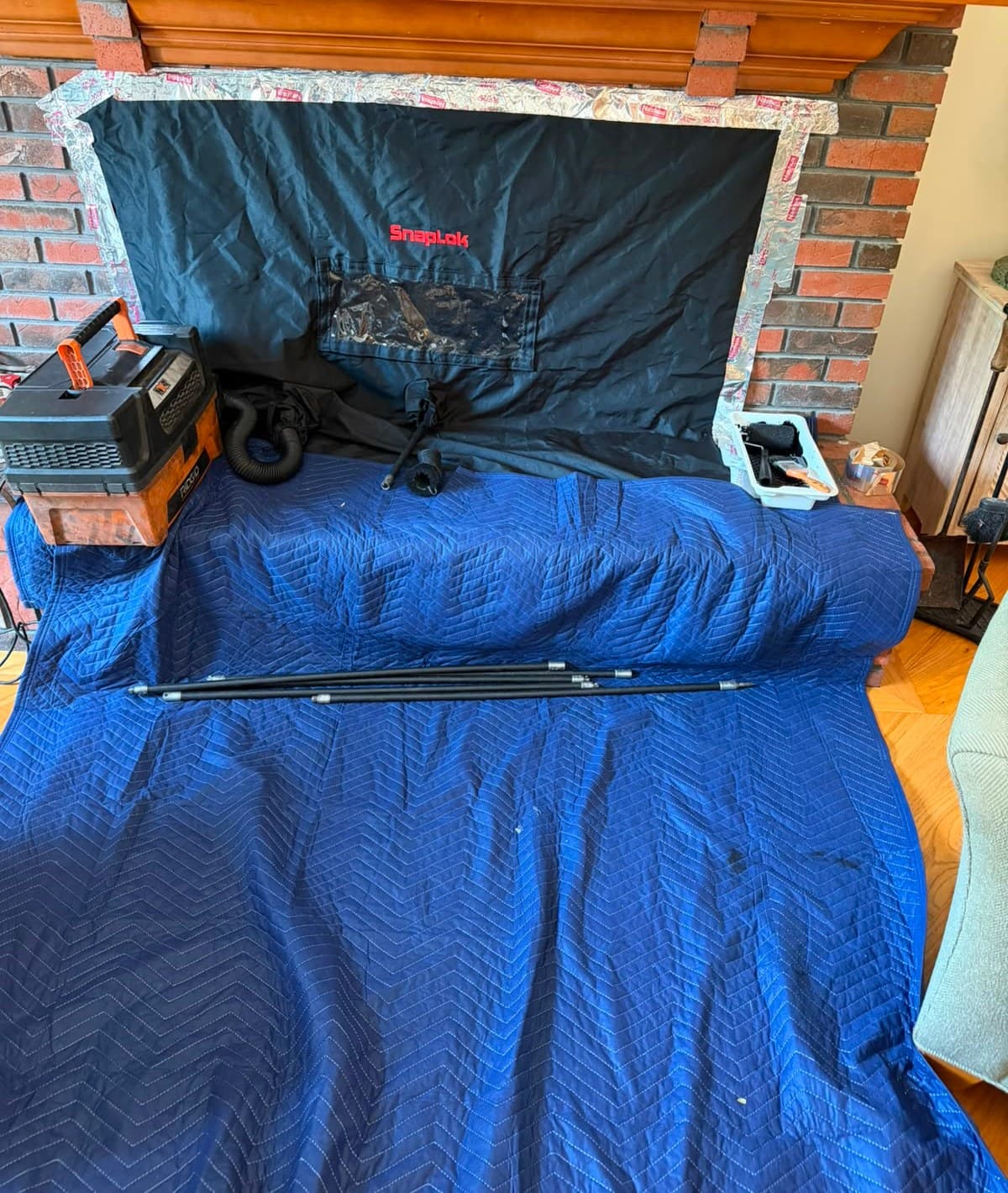
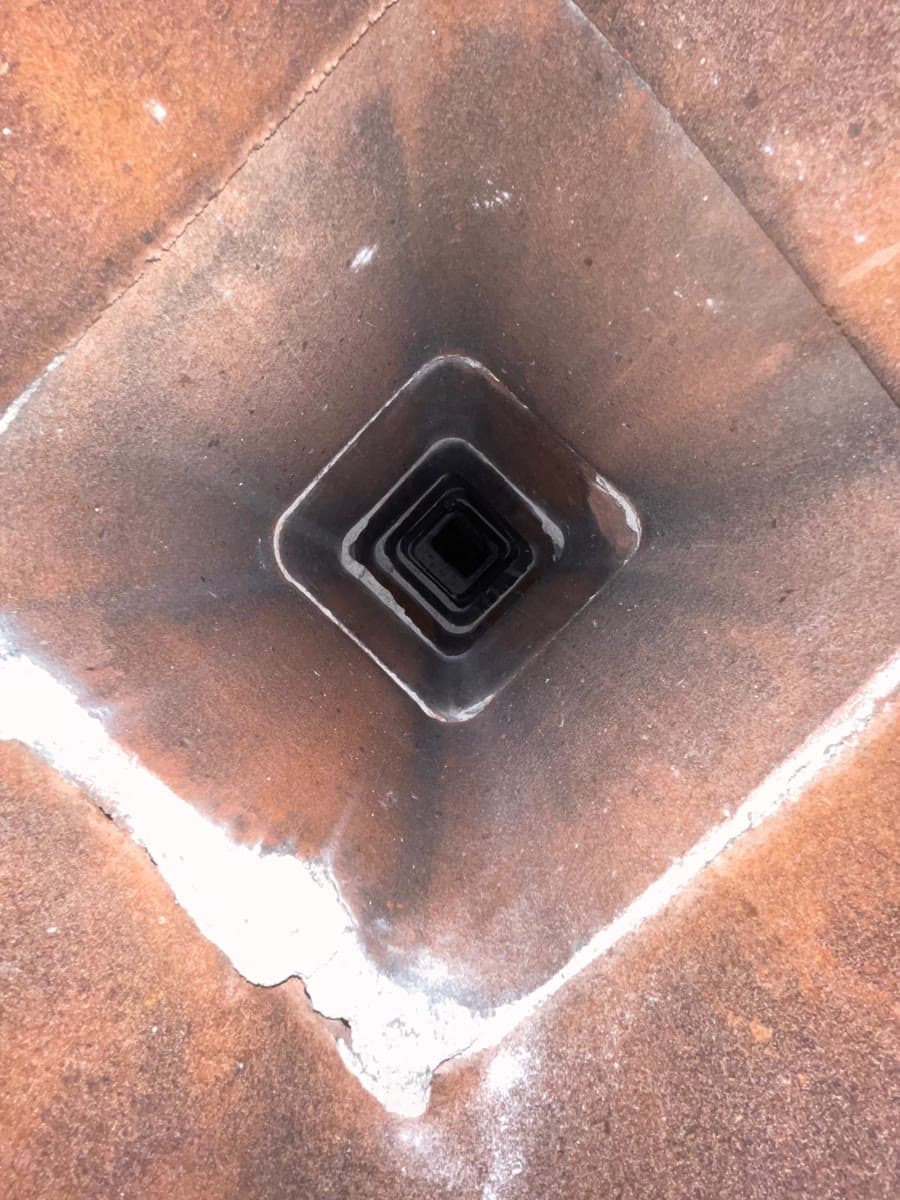
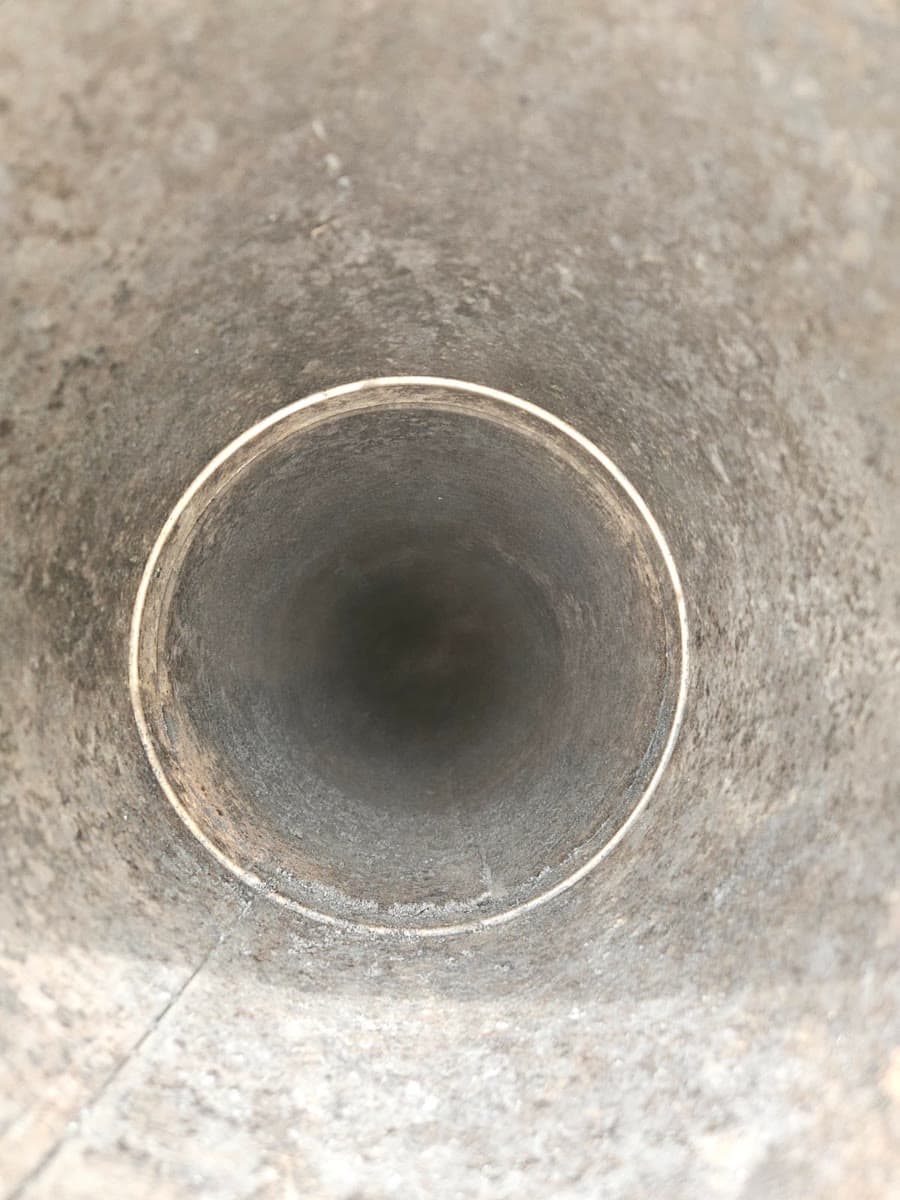
Photographs from our own work in the St. Louis metro.
Common questions
How often does a chimney need maintenance?
An inspection every year, which is what NFPA 211 calls for. Sweeping when there is about an eighth of an inch of creosote, which for regular wood burning usually means once a year. The cap, crown, mortar and flashing are checked in that same inspection and repaired when they start to fail, not on a fixed calendar.
We hardly use the fireplace. Does it still need maintenance?
Yes, though it will need sweeping far less often. Creosote depends on burning, but rain, freeze and thaw, settling, and animals moving into an uncapped flue all happen whether the fireplace is lit or not. An unused chimney can be in worse condition than a busy one, simply because nobody has looked at it.
Is chimney maintenance the same as a chimney sweep?
No. A sweep is one part of it, removing creosote and soot from the flue. Maintenance also covers the inspection that tells you whether a sweep is needed at all, and the cap, crown, mortar and flashing that keep water out of the chimney.
What fails first on a St. Louis chimney?
On older brick chimneys, usually the crown or the mortar in the exposed top courses, with the cap close behind. On factory-built fireplaces in newer houses, the chase cover. In both cases it starts as a water problem, which is why the outside of the chimney matters as much as the flue.
Do gas fireplaces need chimney maintenance?
They need a different kind. There is no creosote, so no sweeping, but the vent has to be checked for blockage and correct sealing, the sensors and burner serviced, and a carbon monoxide reading taken with the unit running. Once a year, ideally in September or October.
What does chimney maintenance cost in St. Louis?
The yearly inspection is a flat $69 with us anywhere in the metro, and it is credited back in full against any repair you book. Sweeping and repairs are quoted after we have looked, as one fixed price in writing before any work starts.
If this sounds like your chimney
A $69 inspection tells you exactly which of these it is, with photos, before anyone quotes a repair.
Chimney Inspection
A full chimney inspection with Total Chimney Services costs $69 anywhere in the St. Louis metro, and the entire $69 is credited back to you if you book a repair with us.
Chimney Sweep
A chimney sweep — chimney cleaning is the same job under a different name — removes creosote, soot and blockages from your flue so the chimney drafts properly and will not catch fire. We quote your chimney before we start, and you approve the price first.
Chimney Cap Installation
A chimney cap is a metal cover with mesh sides that sits on top of the flue. It keeps out rain, animals and debris, and stops burning embers from landing on your roof. It is the cheapest part of a chimney and it prevents the most expensive problems.
Gas Fireplace Inspection
A gas fireplace inspection checks the venting, gas connections, burner combustion and safety controls, and includes a carbon monoxide reading with the unit running. Ours is $69, credited back in full if you book a repair.
Not sure which one this is?
Start with a $69 inspection and a photo report. Credited back in full when you book the work. Call (314) 887-7250.
Open 24/7 · Emergency service, day or night.